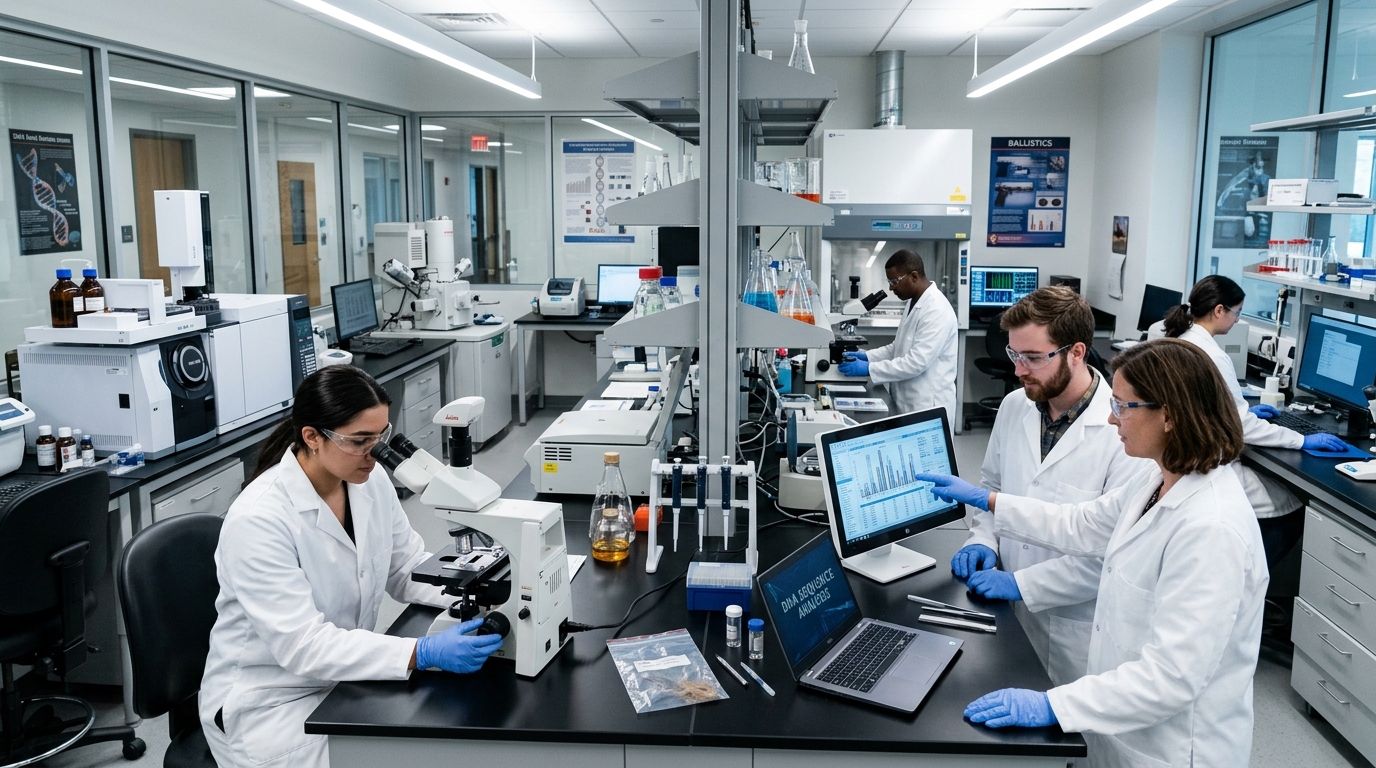
B.Sc. (Research) Forensic Science is an undergraduate programme that combines scientific knowledge with forensic investigation. The course teaches students how scientific methods can be used to examine, analyse and interpret evidence related to crime and investigations.
The programme is suitable for students who are interested in science, criminal investigation, laboratory work, research and evidence analysis. Along with core forensic subjects, a research-oriented curriculum can help students develop analytical, problem-solving and scientific research skills.
| B.Sc. (Research) Forensic Science: Course Highlights | |
|---|---|
| Course Name | B.Sc. (Research) Forensic Science |
| Level | Undergraduate |
| Duration | Typically 4 years for a research-oriented UG programme; may vary by university |
| Eligibility | Class 12/10+2, generally with a Science background |
| Major Areas | Forensic Biology, Chemistry, Toxicology, Fingerprints, Documents, Ballistics, Crime Scene Investigation and Digital Forensics |
| Learning Mode | Classroom, laboratory, practical and research-based learning |
| Career Areas | Forensic Laboratories, Investigation Support, Digital Forensics, Research, Private Forensic Services and Related Fields |
| Higher Studies | M.Sc. Forensic Science and specialised postgraduate programmes |
*Note: Course duration, subjects, eligibility and admission requirements vary by university.
The criteria for eligibility differ from university to university. Generally, students who wish to apply for an undergraduate programme in forensic science must have passed Class 12 or a comparable examination from an acknowledged board.
It is necessary for many universities for students to have studied science subjects including Physics, Chemistry, Biology and/or Mathematics, the specific combination and the minimum percentage varying from institution to institution.
*Students must check the most up-to-date eligibility criteria of the university they plan to apply to, since subject requirements and minimum marks may vary.
Forensic Science involves the application of scientific principles and methods to the examination of evidence, and a forensic professional can work on biological, chemical, physical, documentary or digital evidence in order to assist in establishing the facts during an investigation.
The programme includes a research element which adds a scientific investigation aspect to it. Students are taught how to pose research questions, gather and analyse information, interpret their findings and present their conclusions in a scientific way. The course therefore brings together three important areas: science, investigation and research.
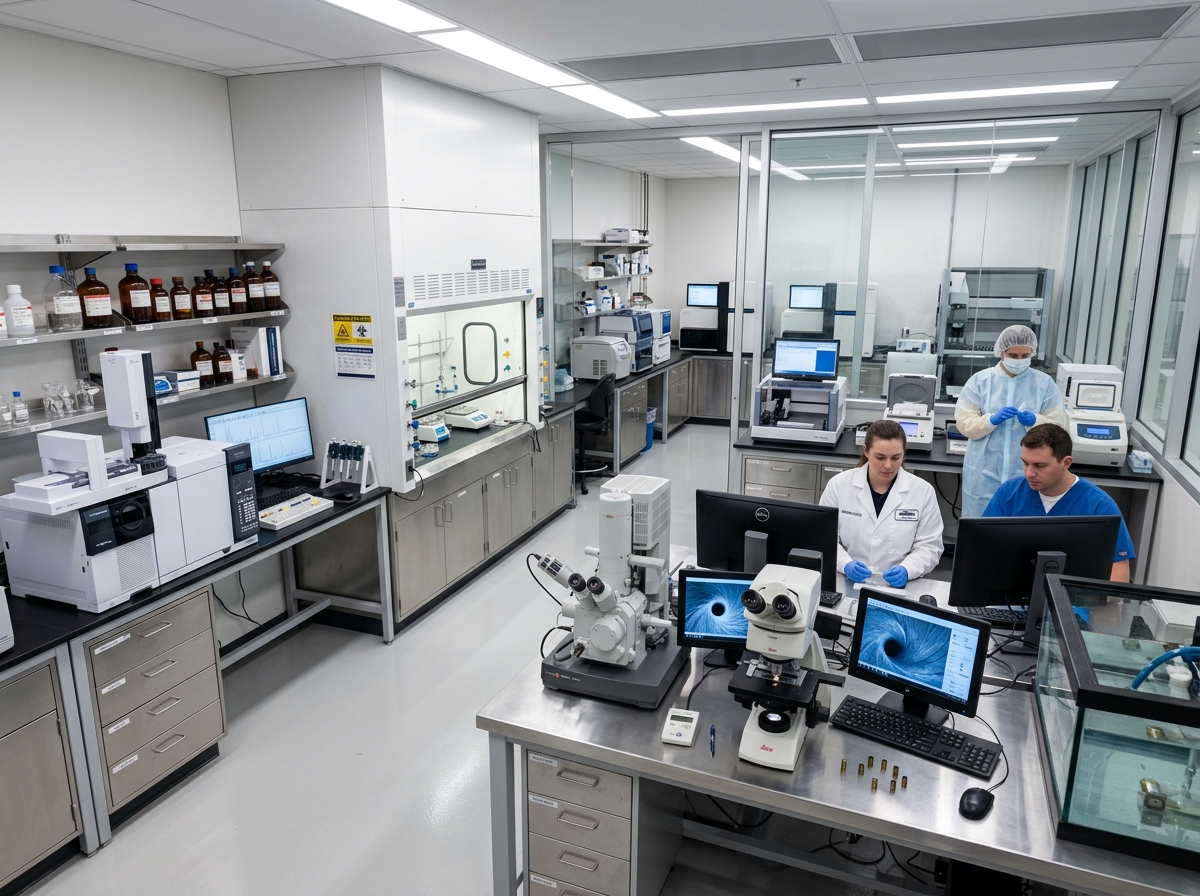
Practical experience is an essential part of the B.Sc. (Research) Forensic Science program. Students will engage in:
Forensic Science is an appropriate choice for students who want to apply scientific knowledge to practical problems rather than merely studying scientific concepts in theory.
Students have the opportunity during the programme to become familiar with laboratory techniques, the examination of evidence, crime scene procedures and scientific research. The fact that forensic science is a multidisciplinary field also enables students to look at a variety of areas before choosing a specialised career path.
Some of the major reasons students choose the programme include:
The exact syllabus depends on the university, but students may study subjects covering:
*Note: The number of semesters and the subjects can vary from university to university.
Forensic science involves both a knowledge of science and certain personal abilities. Those who wish to build a lucrative career in this area should have:
Graduates of the B.Sc. (Research) Forensic Science program can pursue various careers in forensic laboratories, investigation support, research, digital forensics, and related sectors:
Higher Studies Options: Students who want to specialise or move towards research-oriented careers can pursue postgraduate programmes such as M.Sc. Forensic Science, M.Sc. Forensic Chemistry, M.Sc. Forensic Biology, M.Sc. Forensic Toxicology, M.Sc. Digital/Cyber Forensics, M.Sc. Forensic Biotechnology, and Criminology.
Government Sector:
Private Sector:
| Good Fit For | May Not Be the Right Choice For |
|---|---|
|
|
The B.Sc. (Research) in Forensic Science is a good option for those who would like to combine scientific study with investigation and research. Unlike a typical science degree, this programme enables students to look at how scientific knowledge can be applied to evidence and investigative problems.
*Students must set realistic expectations. Career opportunities depend on chosen specialisation, practical laboratory experience, higher qualifications, and employer recruitment criteria.
To apply for the B.Sc. (Research) Forensic Science program through AIFSET:
Fill in the online registration form on the AIFSET website with the required details.
Take the AIFSET entrance examination and secure a qualifying score.
Take part in the counselling process to select your preferred institution based on eligibility.