How to Become a Forensic Ballistics Expert?
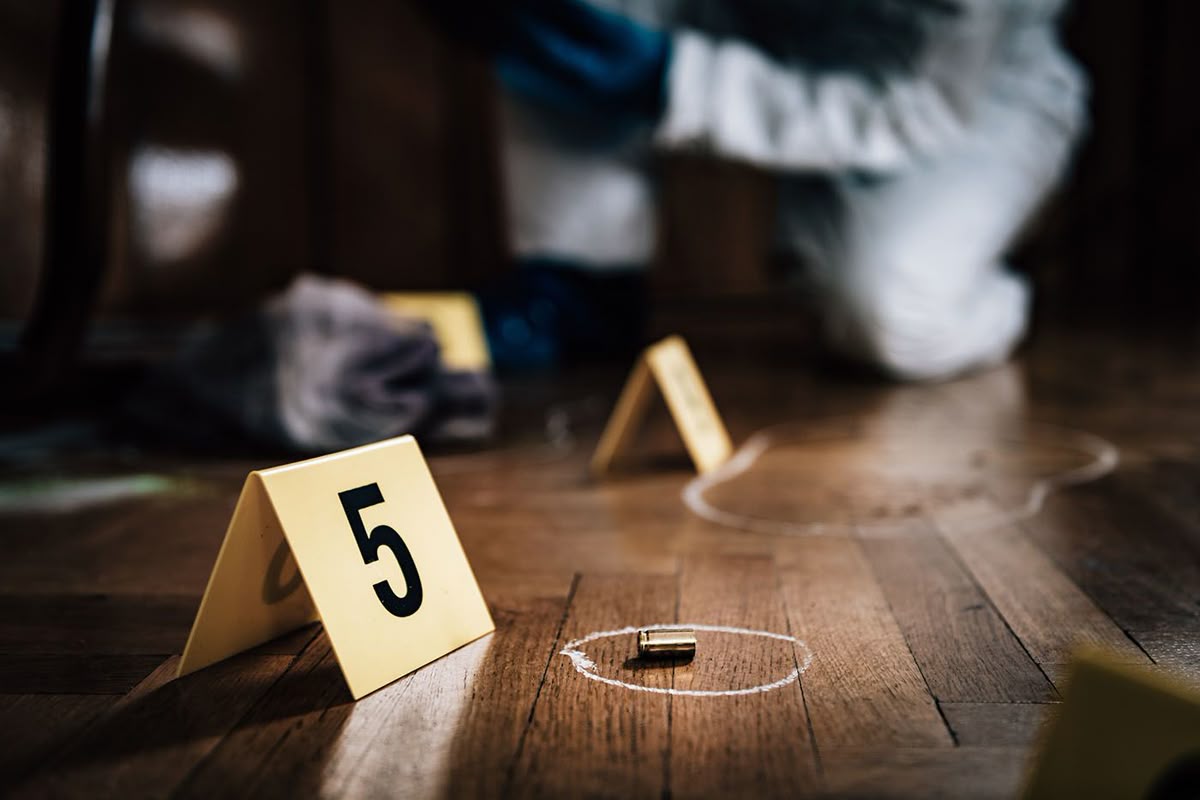
A bullet recovered from a crime scene can be an important piece of evidence. Knowing what that evidence can tell requires much more than just an understanding of firearms. Forensic ballistics combines principles of physics, scientific examination and forensic investigation to help analyse firearms, ammunition, bullets, cartridge cases and other firearm-related evidence.
Ballistics is an interesting specialisation for students interested in forensic science, physics and criminal investigation. However, what is a forensic ballistics expert? What should be the post 12th course of study? So, what is the Forensic Ballistics Course Career Scope in India? If you are considering a career in forensic science, here are a few things you should know before you get started.
What is Forensic Ballistics?
Forensic Ballistics is a specialised branch of forensic science that involves the scientific analysis of firearms and firearm-related evidence. The work may include a study of and comparison between recovered firearms, ammunition, bullets and cartridge cases from an investigation.
A forensic ballistics expert can analyze evidence to assist in identifying its features and if firearm-related evidence could be linked to a specific firearm or event. These tests should be conducted with careful observation, scientific reasoning, detailed documentation and an objective interpretation of findings.
Forensic investigations are not as straightforward as they are sometimes depicted in movies, where all one has to do is study a bullet and determine the type of gun that fired it. It is an organized examination, laboratory techniques and the application of scientific principles to physical evidence. Conclusions should be drawn from the evidence presented and not be based on assumption.
What is the job of a Forensic Ballistics Expert?
The role of a forensic ballistics professional varies with the organisation, laboratory and position. But the overall job is the scientific study of firearm-related evidence that relates to criminal investigations.
Professionals can analyze bullets and cartridge cases, perform lab tests, record evidence and prepare technical reports. They also may be required to relay their results to investigators, legal representatives or courts, depending on their job.
This is a field where accuracy is of the utmost importance. A forensic professional must be systematic, record keeping and be clear between scientific findings and assumptions. Therefore, the ability to observe, analyze, focus on details, and apply scientific reasoning is important skills for students who are interested in forensic ballistics.
How to become Forensic Ballistics Expert after Class 12?
If students wish to pursue this career in Forensic science after Class 12th, it is beneficial to have a good base in Science. Depending on the eligibility criteria of the programme and the university, students can explore undergraduate programmes in forensic science or scientific related fields.
Physics, chemistry and biology are some of the subjects that can be of help in the study of science. Those with a particular interest in firearm-related evidence can then go on to study postgraduate courses that provide an introduction to forensic physics and ballistics.
Students interested in this combination may find M.Sc. Forensic Science with Forensic Physics, Forensic Multimedia and Ballistics an interesting programme. A programme of these areas can give students wider exposure to forensic science and an introduction to the application of physical sciences in forensic investigation.
But it's not as if there's a single academic path that guarantees a student will automatically become a forensic ballistics expert. Admission and eligibility criteria are different for different universities and programmes. Students are always advised to check the latest eligibility criteria, course curriculum and admission process of the institution to which they are applying.
Key Things to Know Before Choosing Forensic Ballistics
- Build a strong science foundation: Physics, chemistry and biology can support further study in forensic science.
- Choose the course carefully: Check the curriculum, laboratory training, practical exposure and specialisations before enrolling.
- Understand the career requirements: Completing a course alone does not automatically qualify you as a forensic ballistics expert.
- Develop analytical skills: observation, logical thinking, attention to detail and scientific reasoning are essential in forensic work.
- Value accuracy and documentation: Forensic conclusions must be based on properly examined and documented evidence.
- Explore postgraduate specialisation: Programmes combining forensic science with areas such as Forensic Physics and Ballistics can offer broader subject exposure.
- Check eligibility before applying: Admission requirements and career pathways can differ across universities and roles.
What is the significance of Forensic Physics in Ballistics?
There is a significant relationship between physics and the study of guns and bullets. By understanding the physical principles, forensic personnel can systematically and scientifically investigate firearm-related evidence.
For students who are interested in forensic science and physical science, forensic physics can be a good introduction to the application of scientific concepts to physical evidence. It can also be used to cultivate the analytical process required to look closely at observations and make evidence based conclusions.
A postgraduate course that integrates Forensic Physics, Multimedia and Ballistics may then be relevant to students who wish to gain broader exposure to forensic science and acquire knowledge that is related to the physics of forensic investigation. The multimedia element can also be used to introduce students to other types of forensic evidence and technology, providing a more comprehensive understanding of the field.
Forensic Ballistics Course Career Scope
The Forensic Ballistics Course Career Scope may span forensic laboratories, investigative agencies, research institutions and other organisations engaged in the scientific examination of evidence. Career prospects, however, rely on the qualifications, specialisation, experience and the need for recruitment of the organisation.
Graduates and postgraduates of Forensic Science can pursue careers in Forensic Examination, Laboratory Analysis, Scientific Assistance, Research and Technical Investigation. A knowledge of forensic physics and ballistics may be helpful in occupations in which firearms play a part in the professional responsibilities.
Government forensic laboratories and investigative organisations are among the areas that forensic science graduates may explore. There may also be opportunities in private forensic laboratories, research institutions and academic organisations depending on their needs.
Students should also be aware that being a forensic ballistics expert is not the same as having taken a course. Some careers might have certain educational requirements, practical experience, recruitment examinations or other requirements. Therefore, it is important to verify these conditions prior to selecting a course.
What skills do you need to have for a job in Forensic Ballistics?
Academic attainment is just one component of being a good forensic professional. Students who are interested in ballistics should also develop abilities that will facilitate scientific investigation in an accurate and objective manner.
Analytical thinking enables them to make sense out of what they observe, and scientific thinking enables them to relate what they observe to the principles they know. Detail is also crucial, as little details can be significant when analyzing forensic evidence.
Communication skills are also important. Forensic professionals must be able to record observations, and communicate technical information to investigators, lawyers, and courts in a clear manner. The ability to conduct research, discipline in the laboratory, and ethical awareness and objectivity are also important.
The most important thing to remember about forensic science is that it's a science, and not a guess. A conclusion should be based on scientific examination and documented findings, not speculation.
Is Forensic Ballistics a Good Career?
Forensic ballistics can be an interesting specialisation for students who enjoy physics, scientific investigation, research and problem-solving. It provides an opportunity to apply scientific concepts to real-world questions involving firearm-related evidence and criminal investigations.
At the same time, students should have realistic expectations about the profession. It is a specialised field that demands accuracy, patience, scientific discipline and continued learning. Choosing a course simply because it contains the word “ballistics” is not enough.
Before enrolling, students should compare the curriculum, laboratory exposure, practical training, specialisations, eligibility requirements and potential career pathways offered by different programmes. Understanding what the course actually teaches is just as important as understanding its career possibilities.
For students who want broader exposure to forensic science while developing knowledge in physics-based forensic investigation, a programme such as M.Sc. Forensic Science with Forensic Physics, Multimedia and Ballistics may be worth exploring.
What must aspirants know?
Becoming a forensic ballistics professional is not simply about learning how firearms work. It requires a combination of scientific knowledge, forensic investigation, analytical thinking, careful documentation and professional ethics.
For students starting after Class 12, the journey can begin with a relevant science or forensic science education and progress towards specialised postgraduate study. The right course can provide the academic and practical foundation, but professional opportunities will ultimately depend on qualifications, skills, experience and the requirements of the role.
If firearms, physics and scientific investigation genuinely interest you, forensic ballistics can offer a specialised pathway within the wider field of forensic science.
FAQs
1. What does a forensic ballistics expert do?
Examines firearms, bullets and cartridge cases to support criminal investigations.
2. What qualifications are required?
A degree in Forensic Science or a related science field, followed by relevant specialisation.
3. Which course is best?
An M.Sc. Forensic Science with Forensic Physics, Multimedia and Ballistics can be a relevant option.
4. What skills are needed?
Analytical thinking, observation, attention to detail, scientific reasoning and accuracy.
5. What is the salary in India?
Salary varies based on qualification, experience, role and employer.